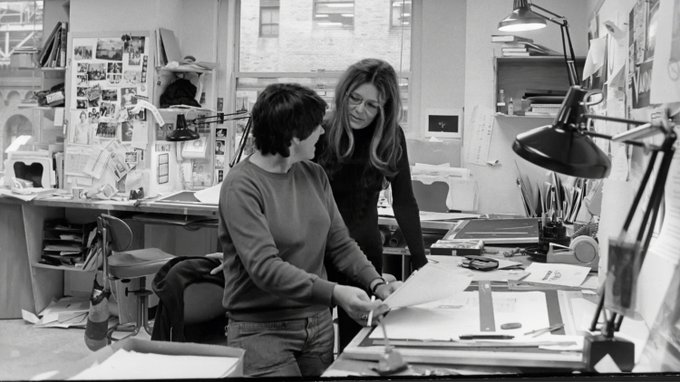
“The future depends entirely on what each of us does every day; a movement is only people moving.” – Gloria Steinem
Note: If you’d rather listen than read, you can also check out the accompanying The Middle Slice podcast episode for this article.
Gloria Steinem died yesterday at the age of 92. The late activist and writer steadfastly fought for her belief that women could change the world together.
For me, Gloria was an intellectual treasure and a profoundly civically engaged global citizen – an inspiration and a gift to women, men, and society as a whole.
What I admired most about Gloria was the way she organically found, learned, relearned, and came to champion an inclusive feminist movement that sought equal rights, liberation, and sisterhood for women of all racial backgrounds, including both Black and white women.
It was also an education to witness her continued growth as an activist; particularly in how she helped integrate conversations around the role of men and the home into feminist discourse, deepening and reframing the feminist idea that “the personal is political.”
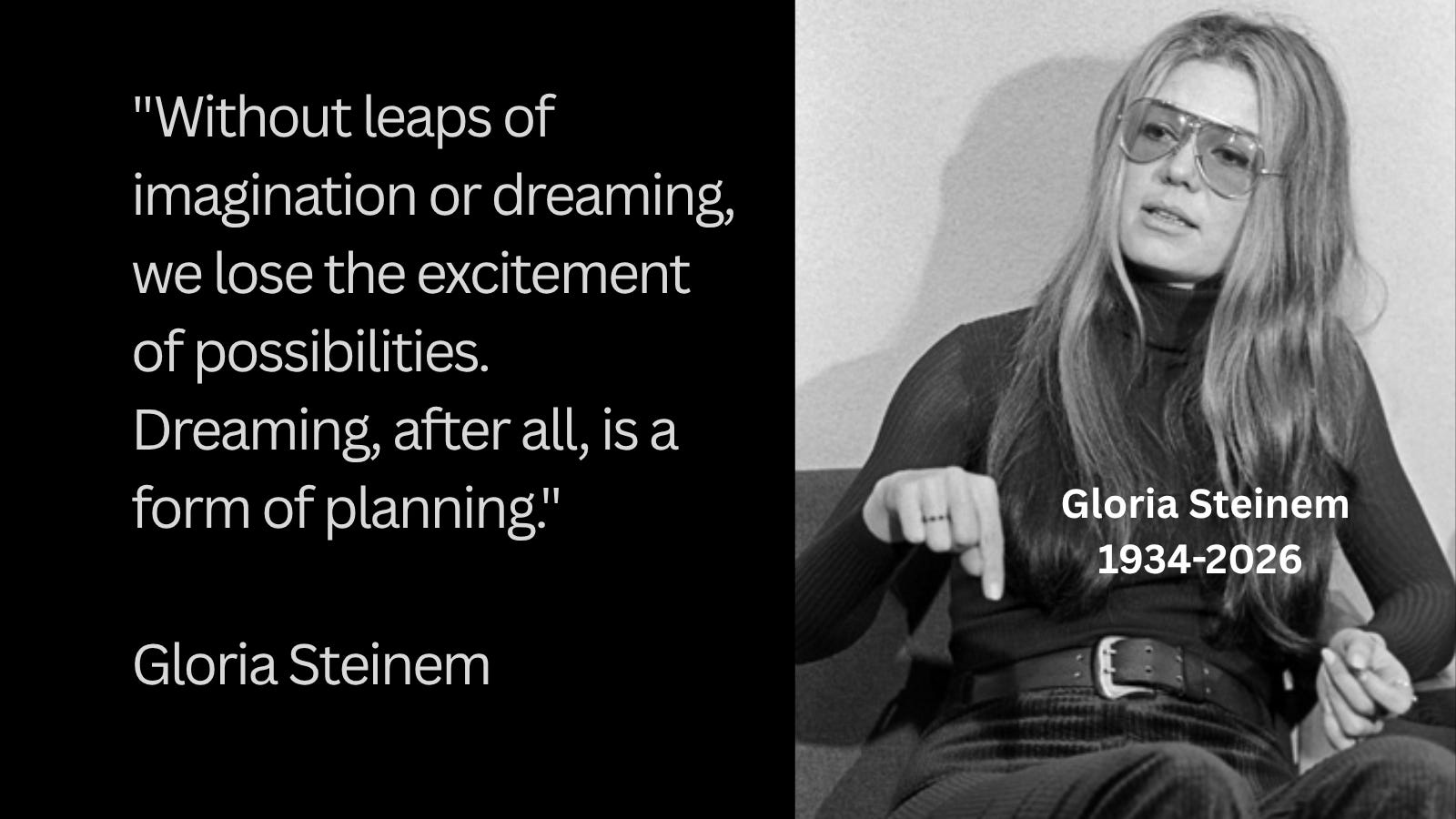
In feminist discourse, “the personal is political” means that experiences traditionally treated as private or individual (such as marriage, motherhood, housework, sexuality, reproductive choices, relationships, and experiences of discrimination or abuse) are often shaped by larger social, cultural, economic, and political structures. What may feel like a personal struggle or individual failure can therefore reflect inequalities that are shared by many women and sustained by society.
Steinem’s concept of the “click of consciousness” offered another lens through which to understand this process: the sudden, eye-opening realization that personal struggles or feelings of inadequacy are actually the result of systemic and societal oppression rather than personal failure.
She described this moment as an internal click … a realization that a person has been silent and silenced by external cultural rules.
Instead of women blaming themselves for encountering barriers, discrimination, or distress, the “click” reframes these experiences as political and structural problems.
Steinem often spoke about her own “click” moments, including her realization of the deep systemic injustice surrounding reproductive freedom during an abortion speak-out in 1969. She later wrote about the concept extensively, including in her 2015 memoir, My Life on the Road.
Her “click of consciousness” also extended to the need to champion a more intersectional vision of feminism.
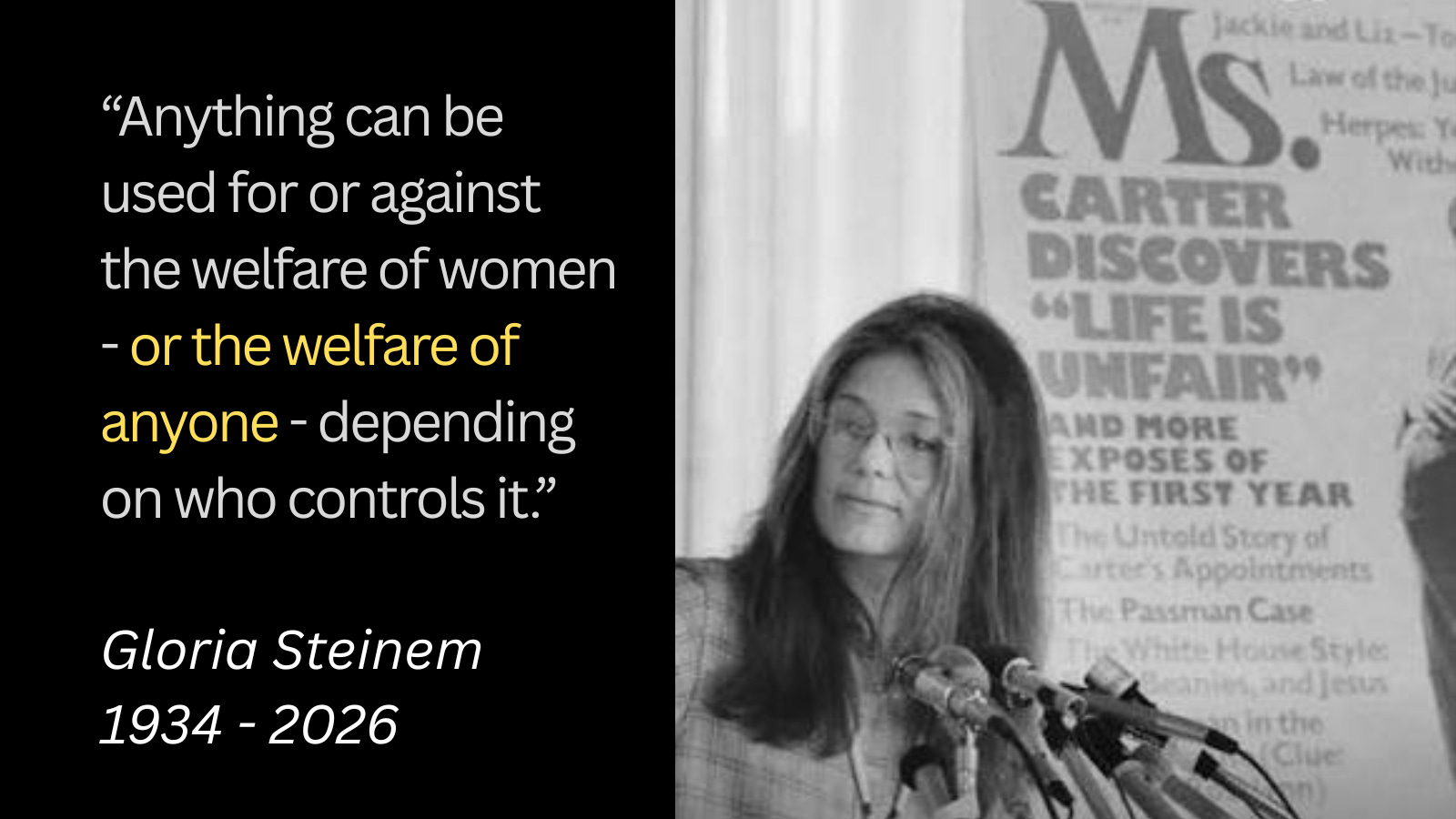
In 1969, Steinem wrote the influential article “After Black Power, Women’s Liberation” for New York magazine. She argued that the women’s movement had to connect with the civil rights struggle and be inclusive in order to succeed.
Steinem frequently noted that she learned vital lessons about intersectional justice from Black activists who fought dual battles against racism and sexism.
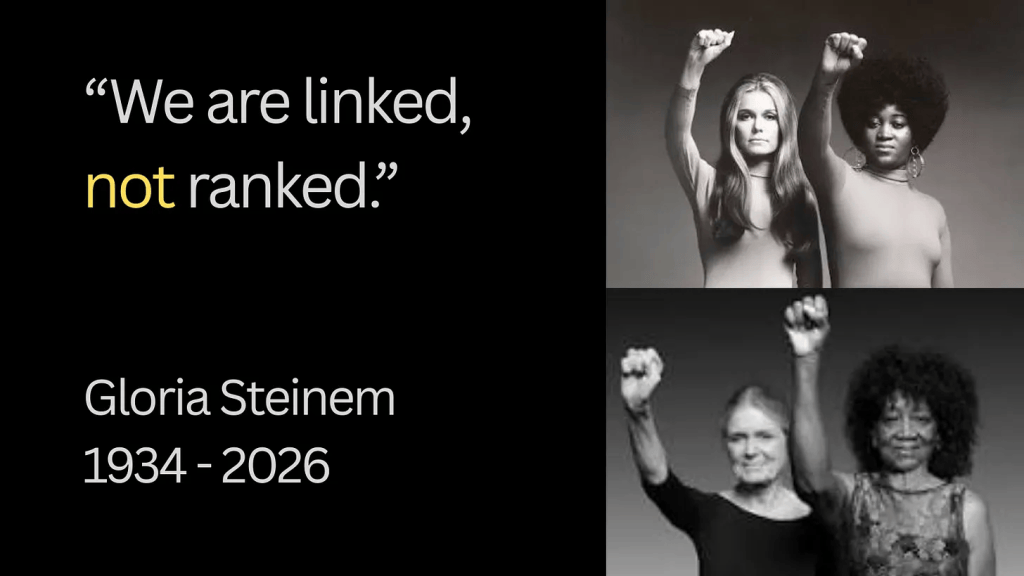
She famously co-founded Ms. magazine and worked closely with Black co-founders and leaders like Dorothy Pitman Hughes. She also helped build diverse political coalitions alongside pioneering Black leaders like Shirley Chisholm and Fannie Lou Hamer, bringing marginalized voices into mainstream politics.
Early 1970s polls published by Ms. magazine showed that Black women supported feminist goals at significantly higher rates than white women. Steinem pointed out that experiencing racial discrimination often made Black women more aware of systemic inequality and more supportive of total liberation.
Her voice will be deeply missed at this pivotal moment in time … when many believe that much of what women fought so hard to achieve has been taken for granted by too many women, while hard-won rights are being chipped away by those in political and other positions of power.
Gloria was an intellectual treasure and a profoundly civically engaged global citizen -an inspiration and a gift to women, men, and society as a whole. Her legacy is a reminder that rights once won can never be assumed to be permanently secured, and that every generation must remain engaged in protecting and advancing them.
Rest in pride Gloria.