
A sense of proportion, or rather, the ability to judge the relative importance or seriousness of things, and to put a situation into perspective, feels more and more like a lost art. Or maybe saying that is, in itself, a sign that I am losing my own sense of perspective. Okay, jokes aside. If there is any argument here at all, it is for the quiet, unfashionable practice of keeping perspective, measuring significance, and knowing when to care, and when to let go.
Lately, I have been playing spy on the wall to two recurring, very of the moment, and popular mainstream conversations. On one side, there is the growing panic about the existential threat artificial intelligence poses to our species. On the other, there is the intense dissection of Rama Sawaf Duwaji’s wardrobe in her recent The Cut interview, as she stands on the brink of becoming the First Lady of New York, her husband poised to take up that monumental role, heavy with symbolism, scrutiny, and social expectation. What fascinates me is not either topic on its own, but the way both conversations reveal how easily we lose our sense of proportion.

Rama Sawaf Duwaji and the Conversations Around Wardrobe
Take the discussion around Rama Sawaf Duwaji. In a recent magazine interview with The Cut, she appears thoughtful, articulate, and visually self possessed. Her clothing, described on social media, and in news coverage, as architectural silhouettes with artistic tailoring, pieces that signal taste rather than obedience, has been parsed endlessly. Commentators have treated her wardrobe not as clothing, but as coded language. Each outfit is read as a statement, a strategy, a disruption.
Her choices have been framed as a rebellion against the quiet acquiescence of former first ladies, women who, fairly or not, are often remembered as having softened themselves to fit the role, subsuming their identities beneath expectations of neutrality, respectability, and supportiveness. In contrast, Duwaji is cast as something else entirely, a symbol of modernity, autonomy, even resistance, a woman refusing to disappear into the background.
All of this, from admiration to anxiety to full blown cultural diagnosis, has been extrapolated from a handful of outfits worn for a magazine shoot. Somewhere between “her fashion choices will change the world as we know it”, and “she simply wore a few artistic outfits because she liked them,” lies reality. That space, unflashy, ambiguous, and unsatisfying to hot takes, is where a sense of proportion lives. It is also where much of our public discourse seems increasingly unwilling to stay.

Artificial Intelligence and the Challenges Ahead
The same pattern shows up, louder, and more consequentially, in conversations about artificial intelligence. Yes, as the famous, and often overused quote goes, with every new invention comes a set of unforeseen consequences. We could not have anticipated them precisely because the invention itself created the conditions for entirely new kinds of mistakes, abuses, and societal casualties.
The printing press destabilized religious authority. Electricity reshaped labour and sleep. Cars revolutionized mobility, while inventing new forms of death. The internet connected the world, while fracturing attention, truth, and privacy.
Artificial intelligence is no different. It already automates tasks, reshapes creative industries, accelerates misinformation, and raises serious questions about labour, authorship, surveillance, and power. These are real issues, deserving of real concern.
But history also shows something else. Societies adapt. There is almost always a correction, a recalibration, a backlash, a set of norms, laws, and cultural antibodies that emerge in response. Not a return to stasis, but a movement toward a new livable equilibrium. As an aside, the most balanced reporting I have seen on AI was a recent PBS News segment on its impact on American colleges, worth checking out if you have ten minutes to spare.
I am not saying that AI fears are silly, or that fashion symbolism is meaningless. The point I am trying to make is that when every development is framed as either world ending or world saving, we lose the ability to respond thoughtfully.
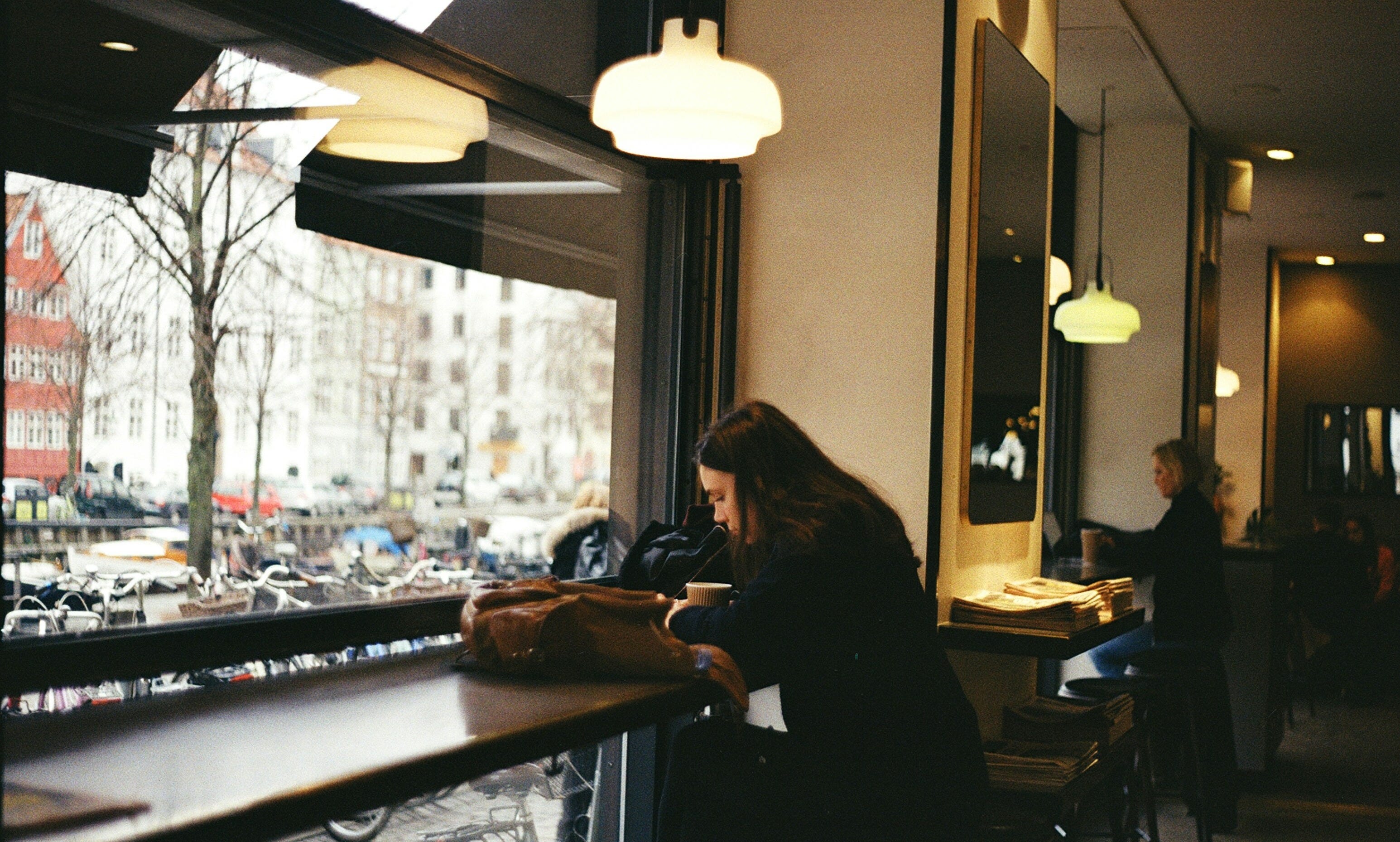
Finding the Middle Ground: The Case for Proportion and Perspective
Lately, everything feels inflated, as if nuance itself has disappeared. A few outfits are read as a political manifesto. A powerful technology is framed as either humanity’s final undoing, or its ultimate salvation.
What is missing from both of these mainstream conversations, or at least missing from legacy news media reporting, is not intelligence or passion, but proportion. The ability to say, this matters, but not in the way we are pretending it does. The ability to hold two ideas at once, that something can be significant without being apocalyptic, symbolic without being destiny defining.
Maybe the real crisis of our moment is not AI, or the wardrobes of public figures, or even the speed of cultural change. Maybe it is that we have grown deeply uncomfortable with the middle ground, with uncertainty, with scale, with restraint. And maybe within that sentence, the one about losing perspective, we can extract something unfashionable, and deeply necessary. A call for moderation. Good old boring moderation. The willingness to resist exaggeration, to slow down, and to stay with complexity, even when it is less satisfying than panic or projection.
Or maybe saying that is, in itself, a sign that I am losing my own sense of perspective. Okay, jokes aside. If there is any argument here at all, it is for the quiet, unfashionable practice of keeping perspective, measuring significance, and knowing when to care, and when to let go. And since January is the time for New Year’s resolutions, maybe I will resolve to join the unfashionable crowd still rooting for good old fashioned moderation.

 The Middle Slice