
I’ve always believed that the real experts in service user care are the people actually facing the issues. So to me, it only makes sense that service users should have a say in shaping their care and the services they rely on. With that in mind, I’ve often pushed for the idea that, as service providers and helping professionals, we should start the planning process by giving service users, along with other key stakeholders, a genuine seat at the design table.
Too often, service users are brought in at the very end of the planning process, when most of the decisions have already been made. And even then, their voices can easily get pushed to the margins.
We need to do a much better job of designing care and services around the needs of the people who use them, not just around the needs (or preferences) of the people who provide them. In short, we need a service user-centered approach to service provision and design.
If we truly want to move toward a more user-centered model of care (and there are plenty of reasons we should) then we also need to explore new ways of approaching service design. One approach I often champion is design thinking (also known as human-centered design). I believe design thinking gives service providers a collaborative, inclusive way to build better services and gain a deeper understanding of what service users actually need.
Design Thinking: A Five-Step Process
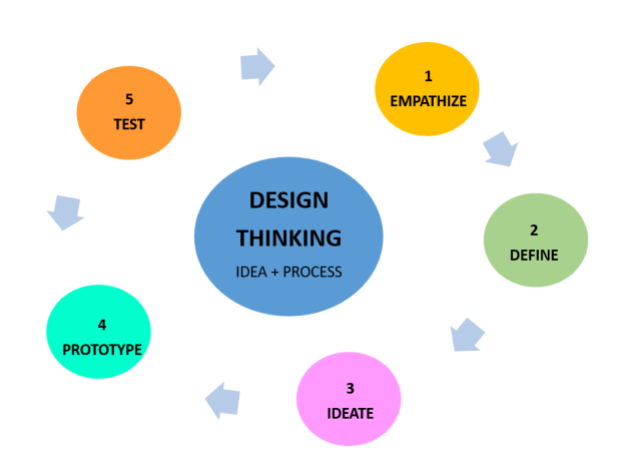
Design thinking is both an ideology and a process that offers a hands-on, user-focused approach to problem-solving. As Nadia Roumani (2018) puts it, design thinking can help “nonprofits apply a disciplined, scaffolded process to solving complex problems, setting organizational or programmatic strategies, increasing creativity and innovation, and improving the internal organization and team culture.”
The Kauffman Foundation (2018) outlines the five-step design thinking process taught at Stanford University’s d.school: Institute of Design:
- Empathize: Understand the experiences and challenges of service users. Design thinking starts with empathy – focusing on the human experience and the challenge at hand. Bringing together a range of stakeholders to share their perspectives is essential to understanding the problem.
- Define: Reframe and clearly identify the issue that needs to be addressed. Once we understand the stakeholder perspectives, we can start to define the problem. This can be one of the hardest steps, but it’s critical that the problem definition centers around the real experiences of the people involved.
- Ideate: Brainstorm possible solutions (no idea is off the table). In this stage, we explore creative ways to solve the problem. Teams imagine what an ideal future might look like and brainstorm possible paths to get there.
- Prototype: Bring ideas to life. Here, the group turns ideas into something tangible – a sketch, a model, a process map – something people can react to. Prototypes should be simple, flexible, and open to change based on feedback.
- Test: Try it out and refine your solution. Using what’s been learned in the earlier steps, teams test their prototypes in real or simulated settings. This stage is all about iteration and improvement. Failure isn’t a setback – it’s part of the process.
By putting service users at the centre from the very beginning, and using approaches like design thinking to guide the process, we can create services that truly meet real needs, rather than just ticking boxes.

 The Middle Slice